



April 15, 2024
Use of 3D scanner increases efficiency and reduces labor and material costs See the articleAn international company and global leader in business aviation service has turned to 3D modeling of the plane’s interior to design, produce, and assemble Boeing 737 BBJ2 furnishings.
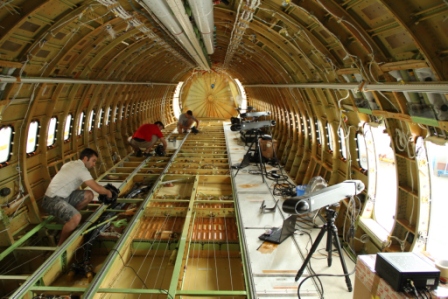
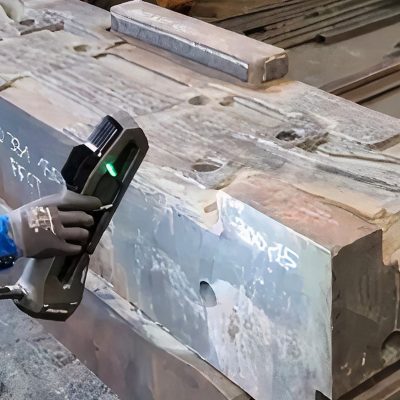
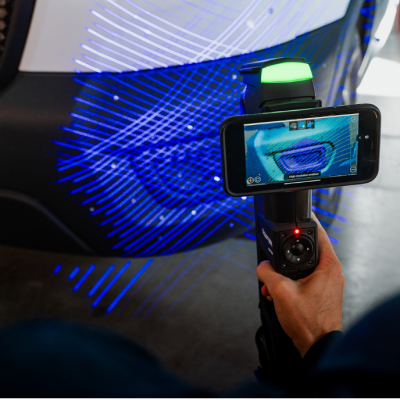
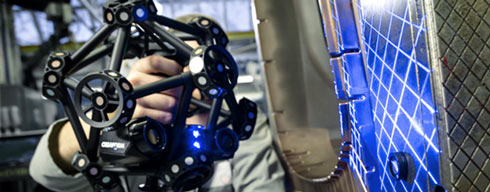
The project consisted of 2 steps: conducting a full scan of the plane interior and creating 3D model files. To complete the 1st step, a team of Creaform applications engineers travelled to the client’s facilities in Germany. The engineers came equipped with Handyscan 3D scanners, a Leica long-range scanner, MetraSCAN optical CMM 3D scanners with C-Track sensors and a MAXscan for the photogrammetry part. Once the data was acquired and compiled, the files were post-processed before being transferred to Creaform’s CAD Department in Lévis for phase 2.
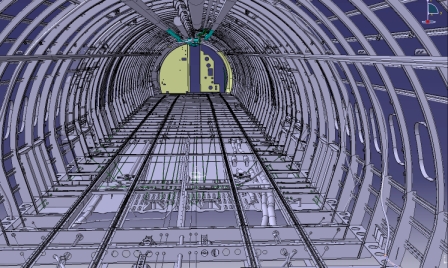
Using CATIA V5 software, Creaform designers reconstructed the plane’s interior, including the various elements of the plane’s structure, such as floor beams and plates, frames, longerons, mechanisms, and various types of piping and wiring. Work was broken down into parts according to the plane’s sections. Using digital files, solid models of airplane elements were recreated.
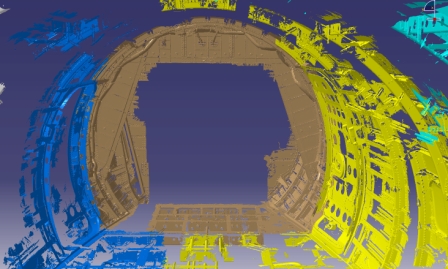
These solid models can be sectioned, and planes or surfaces can be built directly on top of them. For objects with continuous sections, solid models were generated either as an extruded section following a direction or as a scanned section following a trajectory. For non-continuous parts (e.g., in the case of certain mechanisms), the elements were broken down into basic pieces that could be redefined using simple geometric functions. Surface models were used to render some objects whose shapes were too complex.
The surface models were then thickened to obtain solid models. In the case of this reconstruction, the degree of precision required enabled us to reuse reconstructed elements in different places, such as for the pulleys that guide the control cables.
To complete the project, all reconstruction files were assembled to produce a 3D model of a Boeing 737 interior and delivered to the aviation service company, which used the virtual 3D reproduction to design, produce, and assemble the plane’s interior furnishings to meet the needs of its demanding clientele.


20 Dec '11
Michelle
I also want experience to design an interior of an train or an air plane. This task might be really challenging for me. Love the idea on using 3D imaging to see the layout of the design.
31 Dec '11
ruediger benedikt
i just wanted to say i really love these articles we are really not aware how creative human being can be, just look at the design of these planes, you walk in and within a few hours you crossed the atlantic, really very interesting to see how they are being done, very good work ruedigerbenediktshopping. com kind regards
11 Oct '13
Antonio Sánchez
An exceptional work
25 Mar '14
sistema venus
is the first time you visit this web site and I was liking this much information here
2 May '14
lorena
I also want experience to design an interior of an train or an air plane. This task might be really challenging for me. Love the idea on using 3D imaging to see the layout of the design.
5 Sep '14
Click aqui
It's amazing how technology has advanced, especially in the aeronautics and 3d design, is the future that is already here